

 Ravi Dangariya
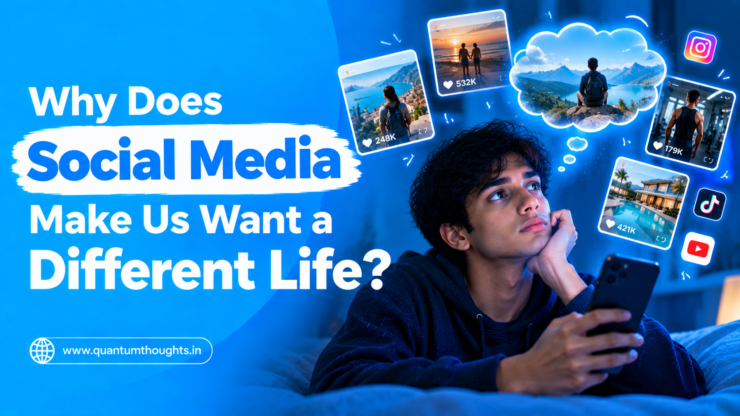
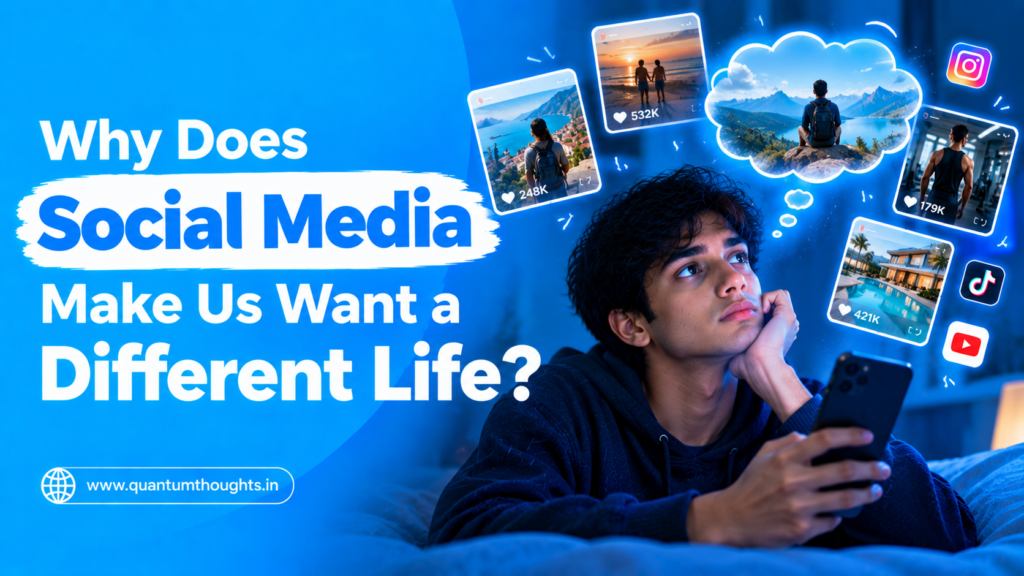
A life that looks impressive to others may not be the life that feels meaningful to you.
Sometimes, we open social media for just a brief moment.
One Reel.
Then another.
Someone’s beautiful home.
Someone’s luxury car.
Someone’s foreign trip.
Someone’s perfect relationship.
Someone’s successful career.
And after a while, a strange thought might cross our minds—
“I want a life like that, too.”
A short while ago, our lives seemed ordinary.
But after seeing someone else’s life, our own suddenly feels inadequate.
This question is important:
Does social media really make us want the lives others have?
Often, the answer is-yes, but not directly.
Social media doesn’t just provide information about other people’s lives.
It constantly shows us-and creates-an image of what life should be like.
We begin to view our lives through the eyes of others.
Before the advent of social media, we primarily evaluated our lives based on our own experiences.
Do I like my home?
Does my work give me satisfaction?
Is my relationship healthy?
What do I want in my life?
But with social media, we have thousands of examples for comparison.
Someone’s success.
Someone’s lifestyle.
Someone’s physique.
Someone’s relationship.
Someone’s productivity.
Gradually, the question shifts:
From “What do I want?”
To—
“What do others have that I don’t?”
This is part of the comparison trap.
Social media shows us a “highlight reel.”
People generally do not share their entire reality on social media.
They share selected moments:
A great photo.
Success.
Vacations.
Celebrations.
Achievements.
Relationship moments.
None of this is bad. None of this is bad.
The problem, though, is when we begin to see these chosen moments as a person’s entire life. The problem, though, is when we begin to see these chosen moments as a person’s entire life.
Seeing a beautiful vacation photo, we cannot see the anxiety, stress, financial pressure, or relationship problems within that person’s life.
We are seeing only the result, not the process.
And then, we compare our own entire reality with their best moments.
The New Definition of a “Perfect Life”
Social media can gradually shape our perception of an ideal lifestyle.
A beautiful home.
A perfect body.
A successful career.
A happy relationship.
Frequent travel.
Expensive experiences.
A large social circle.
Constantly seeing all this leads our minds to believe that—
“This is what a successful life looks like.”
But the question is:
Is this truly our own definition, or have we adopted it as our own simply because we see it so often?
Sometimes, what we perceive as our dream isn’t actually our own.
It is merely a dream we have frequently seen others living.
Likes and Validation
Social media does not merely showcase a lifestyle.
It also rewards that lifestyle.
Beautiful photos garner likes.
Travel posts attract comments.
Success stories earn appreciation.
Consequently, a connection can form in our minds:
“Such a life = more attention.”
And then, we no longer desire only the kind of life that makes us happy.
We may also begin to desire a life that appears impressive to others.
This is where external validation becomes significant.
We want to buy feelings rather than things.
When we see a luxury car, perhaps we don’t actually want the car itself.
Maybe we want the feeling associated with that car.
Success.
Status.
Freedom.
Recognition.
And if we see a beautiful relationship, maybe what we want is… more than the relationship itself…
security, love and belongingness.
When we see a travel photo, perhaps what we crave—more than the destination—is…
freedom and excitement.
Understanding this distinction is crucial.
Because if we grasp our underlying needs, we might not feel the need to copy someone else’s life exactly.
FOMO can take us to a “different life”.
FOMO (fear of missing out) can creep up on us when we see people doing things all the time on social media.
“We’re all moving forward.” “We’re all moving forward.”
“Everyone’s having a good time.”
Everybody’s doing something big.
“I’ve been left in the dust.
This mentality can create discontent with where we are now.
But “everyone” isn’t actually everyone.
We are only seeing selected moments from people who are active on social media.
Many people who lead ordinary lives, who are struggling, or who don’t post anything at all—they do not appear in our feeds.
Social media can also give rise to new desires.
We often think that advertising merely sells products.
But social media lifestyle content can also inform our desires.
Maybe we don’t need this item now.
But when we repeatedly see a certain lifestyle, we begin to feel:
I ought to have this.
You can think of this as a “manufactured desire.”
Sometimes, we don’t feel a need for an item before buying it.
But after seeing it repeatedly, we begin to feel that we need it.
Disconnecting from One’s Own Life
Perhaps the biggest issue isn’t comparison.
It is—
Losing the connection with one’s own life.
When we constantly watch what others are doing, we may stop asking ourselves:
“What do I truly enjoy?”
“What kind of life do I want to live?”
“What does success mean to me?”
“What brings me fulfillment?”
If we start looking to social media for the answers to these questions, our lives gradually begin to take shape according to others’ definitions.
So, should you give up social media?
Not necessarily.
Social media has many positive aspects.
It can provide us with knowledge.
It helps us meet new people.
It can spark creativity.
It can generate new opportunities.
But it has to be used consciously.
There is a difference between being inspired by someone’s life and thinking your own is inferior.
The next time you see a post by someone and you think:
“I want that kind of life, also.”
Take a moment, ask yourself:
“Do I want this life, or do I want the feeling that comes with it?”
The answer might teach you something new about yourself.
Create Your Own Definition
What does success mean to you?
More money?
More freedom?
Peace?
Time with family?
Creative work?
Meaningful relationships?
Knowledge?
Health?
The answer may differ for everyone.
Social media might show you an “ideal life.”
But you have to create your own definition of an ideal life.
💭 Do share your thoughts in the comments:
What part of this article did you find most relatable? Has social media ever made you feel like you need something “more” in your life?
In your opinion, does social media actually compel us to desire a new life, or does it simply amplify our existing unfulfilled desires?
Written by Ravi Dangariya(Rick Patel)






Add comment