
 ravidangariya539@gmail.com
Sometimes, we decide that we want to change something in our lives.
We want to stop overthinking.
We want to cut down on phone usage.
We want to start a new habit.
We want to spend more time with ourselves.
Or, we want to change a long-held belief.
Initially, we feel highly motivated.
But after a few days, we slip back into those same old habits.
And then, a question arises in our minds-
“I want to change, yet why am I unable to?”
Do we lack willpower?
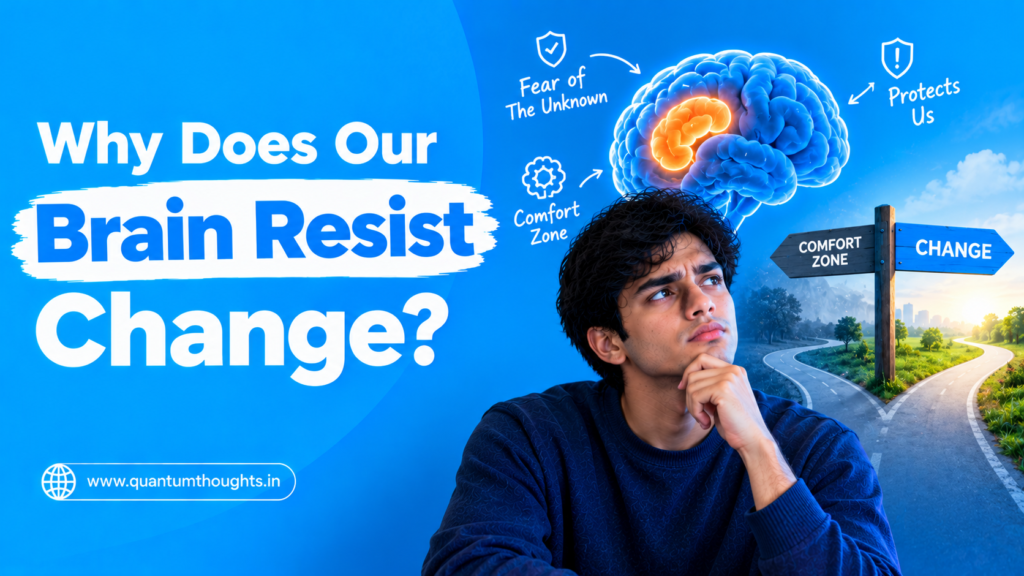
Or is it simply that our brain does not easily accept change?
The answer to this question is only possible if we know how the brain works and how it learns.
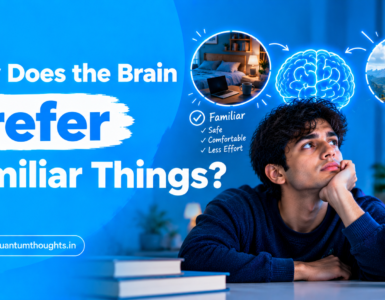
Why does our brain like familiar things?
Our brain likes to function in environments it is already familiar with.
Imagine you check your phone first thing in the morning when you wake up.
After a while this becomes so automatic you don’t even need to think about it.
But if you stop checking your phone when you wake up and instead start reading for ten minutes, it will be hard at first.
This is because the old habit is already established and the new one takes effort.
Something familiar isn’t necessarily good; often, it has simply become a habit.
Why does change make us uncomfortable?
Suppose you are afraid of speaking in public.
Now, you decide that from this point on, you will openly express your thoughts.
But when the opportunity arises, thoughts start racing through your mind.
“What if I say something wrong?”
“What if people make fun of me?”
“What if I fail?”
Here is an interesting point.
You want change but the unknown that comes with it is stopping you.
The brain is often able to more easily predict familiar situations, while there is less certainty about what will happen in a new situation.
Consequently, one may feel uneasy when trying something new.
However, feeling uneasy is not the same as being in actual danger.
Sometimes, we hold back simply because an experience is new to us.
Why do old habits pull us back?
Many of our habits are linked to specific situations.
For example, when you feel stressed, you open social media.
For a while, your attention shifts away from the problem.
You feel a little better.
This relief may make you want to check your phone again when stress hits next time.
Gradually, this can turn into a habit loop.
Trigger → Habit → Short-term Relief
When you try to change this habit, the stress remains, but you have to let go of the old reaction.
That is why simply deciding, “I won’t use my phone anymore,” is not always enough.
You also need to understand why you are drawn to the phone and what alternative reaction you can adopt instead.
Why does our brain cling to old beliefs?
Change can be difficult—not just regarding habits, but also regarding our thoughts.
Suppose you have believed for years that you cannot succeed in any major undertaking.
Now, you get a new opportunity.
But your mind immediately says-
“I can’t do this.”
If you fail, you feel that your belief was correct.
But if you succeed, you might simply dismiss it as luck.
This is where ‘confirmation bias’ can come into play.
In other words, we often pay more attention to information that supports our existing beliefs.
Consequently, even when there is an opportunity to change an old belief, we cling to it.
But there is a question-
Does an idea become true simply because it has been in our minds for a long time?
Perhaps change begins when we start viewing our thoughts not as absolute facts, but as beliefs that can be examined.
We desire change, yet we are unwilling to let go of our old identity.
Sometimes change is difficult because it threatens our self-concept.
A person who thinks of themselves as chronically shy might find it strange to act confidently.
If someone constantly tells themselves, “I am always lazy,” then working consistently can feel at odds with their established identity.
We often hold on to more than just old habits.
We also hold on to old stories about ourselves.
However, it is not necessary to always behave the way you have in the past.
Your past may explain your habits, but it does not determine your future.
So, how do you prepare your mind for change?
You do not always need to make a major decision to bring about change.
Sometimes, starting small can be more effective.
- Start small: Do something different for five to 10 minutes a day, rather than reinventing the wheel.
- Identify old triggers: Understand when and why you slip back into the old habit.
- Rather than reaching for your phone the minute you feel stressed, try taking a short walk instead.
- Don’t treat a slip as a failure: Just because you return to the old habit for a day, doesn’t mean you’ve ruined all your hard work.
- Challenge your thinking: When you think “I can’t do this” look at the evidence.
This process can take time.
A new habit does not develop at the same speed for everyone. Consistent practice, a suitable environment, and repetition can help make it more natural.
Your brain may prefer what is familiar, but growth begins when you question whether familiar is still right for you.
Do share your thoughts in the comments:
What did you find most relatable after reading this article? Is there a habit or belief you, too, wish to change—one you have been accustomed to for years?
In your opinion, what is the biggest obstacle to change: our old habits or our beliefs about ourselves?
Written by Ravi Dangariya(Rick Dangariya)



 Ravi Dangariya




Add comment