

 Ravi Dangariya
Being seen online feels good, but being understood is what creates real connection.
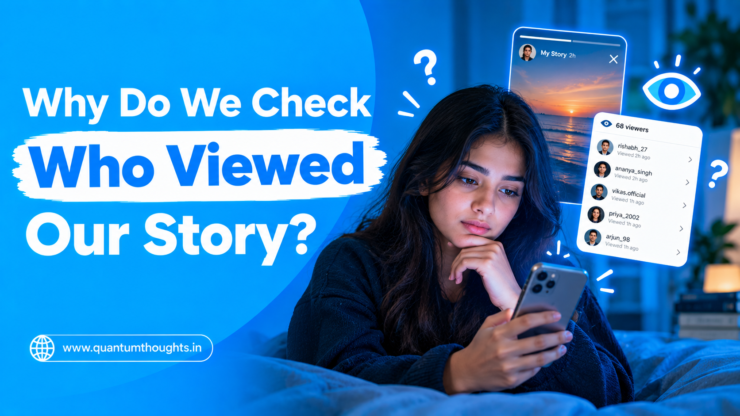
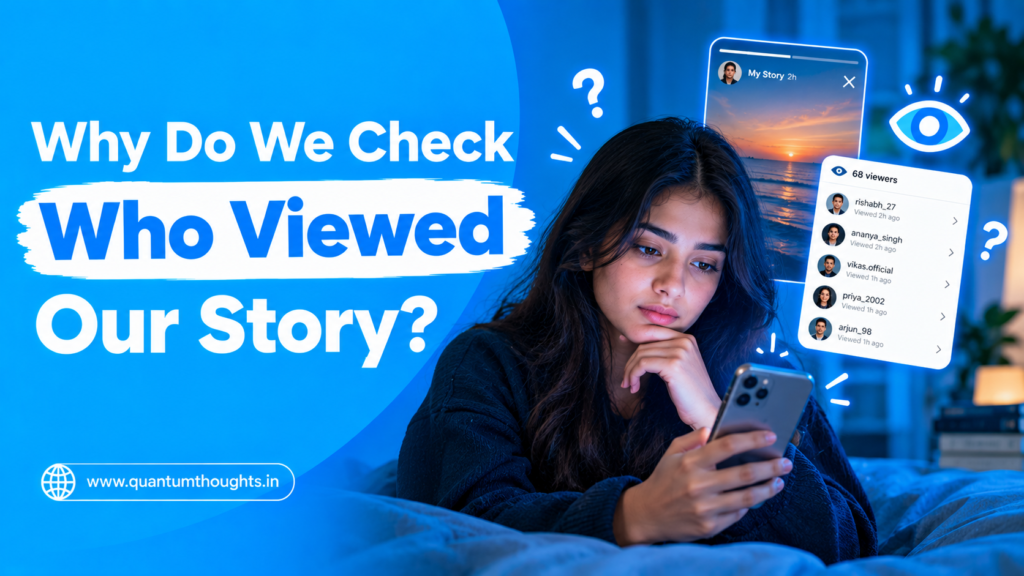
After posting a story on Instagram or WhatsApp, you probably do one thing too-
Opening the story again after a while.
“Who has seen it?”
Then, checking the list of viewers.
Looking to see if a specific person has viewed it.
Checking if anyone has reacted to it.
And if the person whose view we were waiting for hasn’t seen the story, a question immediately pops into our mind-
“Why haven’t they seen it?”
Interestingly, when posting a story, we might have simply intended to share a photo or a thought.
But once it’s posted, we often start caring more about the viewers than the content.
Why do we do this?
Is it merely curiosity?
Or are factors like validation, social connection, and certain psychological tendencies of our brain at play?
Our brains are sensitive to social feedback.
Humans are a social species.
In the past, it was important how people saw us, whether they accepted us and where we were in a group.
Social media has turned this social feedback into numbers and lists today.
How many likes?
How many comments?
How many views?
And with Stories, we can see exactly who has viewed our content.
Consequently, the viewer list can feel like a mini-dashboard for social feedback.
“Who saw it?” Often, there is a specific person in mind.
We don’t always check the list of viewers equally.
We are looking for someone specific.
A friend.
A crush.
A partner.
An ex.
Or someone whose opinion matters to us.
Here, the curiosity becomes more personal.
A question arises in our minds:
“Did they see my Story?”
And if they did—
“How soon did they see it?”
“Why didn’t they react?”
“What might they be thinking?”
In this way, even a simple view can give rise to various interpretations in our minds.
The Need for Validation
Sometimes, we don’t post a story merely to share it.
Deep down, we also want someone to notice it.
For a specific person to notice it.
For someone to appreciate it.
For someone to respond to it.
We can understand this in the context of validation.
When an important person views our story, we may experience a small emotional reward.
And when that person doesn’t view it, we may feel disappointed.
The problem arises when our emotional state begins to depend on the online behavior of others.
Curiosity keeps us checking back.
Curiosity plays a major role in the habit of checking who has viewed your story.
If you know whether a specific person has viewed the story or not, there is no uncertainty.
But when you don’t know, your mind naturally seeks the answer.
“Who viewed it?”
This uncertainty can prompt us to open the app again.
We check once.
We check again after a while.
Then again.
This can turn into a repetitive checking loop.
Variable Reward and Social Media
There is an interesting aspect to social media—we do not receive the same kind of feedback every time.
Sometimes, an important person views your story.
Sometimes, you get a reply.
Sometimes the person who answers is not the one you expect.
Other times there’s no response.
Such unpredictable feedback can sustain curiosity.
Such unpredictable rewards can reinforce the habit of repeatedly checking digital platforms.
That is why we often open the app—because we are never quite sure what we might see this time.
Does a “view” imply “interest”?
Here is where a big misunderstanding can occur.
Just because someone’s seen your story doesn’t mean they’re thinking something specific about you.
They might just be casually scrolling through stories.
“Maybe it’s a habit. Maybe the algorithm made them open the story.
They might have had some spare time.
They might have liked the content.
Or, they might have just tapped through the stories quickly.
Similarly, if someone hasn’t viewed your story, it doesn’t mean they are ignoring you.
Perhaps they are busy.
Perhaps they haven’t opened social media.
Perhaps they missed the story.
Or perhaps they are watching fewer stories lately.
However, our minds often fill in the gaps of missing information with our own interpretations.
From Story Views to Overthinking
This is where overthinking can begin.
“They haven’t seen it.”
“Maybe they don’t want to talk to me.”
“Did I post something wrong?”
“They viewed someone else’s story, but why not mine?”
All these thoughts can attach emotional meaning to a simple digital action.
However, a view—or the lack thereof—is not a reliable measure of someone’s feelings.
Mistaking digital behavior for emotional evidence can often be misleading.
What can we do?
First, awareness.
Next time you want to see who viewed your story, ask yourself:
“Am I checking out of real interest or am I checking out for validation?
If the answer is validation, take a moment.
2ndly: try to reduce the habit of opening the viewer list again and again after posting a story.
Thirdly, don’t attach your self-worth to whether a certain person viewed your story or not.
And most important of all-
Don’t measure your self worth by someone else’s digital footprint.
Who views your Story does not define your personality, importance, or worth.
Being “seen” on social media is different from being “seen” in real life.
We like being “seen” on social media.
But perhaps we crave something deeper in life—
To be understood.
Someone might see our story.
But someone might also see into our mind.
Someone might react to a post.
But when someone tries to understand our feelings, that’s another thing.
Digital attention is not emotional understanding.
💭 Do share your thoughts in the comments:
Do you also prefer to check who viewed your story first after posting it?
In your opinion, do we check story viewers out of curiosity, or because we crave someone’s attention and validation?
Written by Ravi Dangariya (Rick Patel)








Add comment