

 Ravi Dangariya
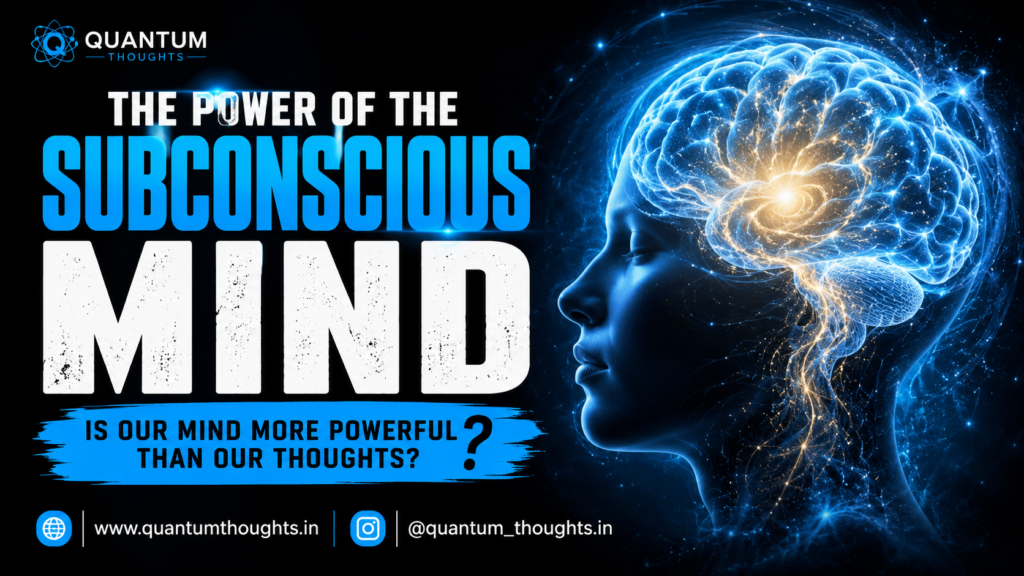
The subconscious mind does not decide your future. It quietly shapes the choices that create it.
We hear a lot about the “subconscious mind.” Some people say that you can achieve whatever you desire through the subconscious mind, while others believe it is merely a figment of the imagination.
So, the question is : Is the subconscious mind truly as powerful as people claim?
From a psychological perspective, our brain performs many processes of which we are not even directly aware. Subconscous processes play a significant role in the decisions we make, the habbits we develop, and the way we perceive the world.
In this article, we will explore the difference between popular beliefs about the subconscious mind and the scientific understanding of it.
What is the subconscious mind?
Our mind is generally described as consisting of two parts :
- Consicous Mind : Which we currently us for thinking, making decisions, and focusing attention.
- Subconscious Mind : Where our habbits, memories, learned reactions , and many automatic mental processes are stored.
When you learn to ride a bicycle, you have to think about every step at first. But after a while, you can ride without thinking. The subconscious mind plays an important role in this process.
Does the subconscious mind really exist?
In modern psychology, the term “subconscious mind” is used somewhat differently than in popular books,
Scientists generally use terms like “unconscious” or “non-conscious” processes.
This means that many processes occur in our brains that we do not consciously think about.
For Example :
- Recognizing faces
- Understanding language
- Behaving according to habits.
- Driving a vehicle
- Making quick decisions
All these processes are constantly taking place.
How does the subconscious mind form habits?
Action we peform repeatedly gradually become automatic.
For example :
- Checking your mobile phone upon waking up in the morning.
- Reading the news while drinking tea.
- Taking the same route to the office every day.
Initially, all of this happens consciously.
However. over time, the brain automates the process to conserve energy.
This is precisely why breaking bad habits feels difficult and forming good habits requires efforts at the start.
Does the subconscious mind influence our decisions?
Yes.
There are many decisions that we do not make based purely on logic.
Our past experiences, feelings, beliefs and habits shape our choices.
For example, a person who had a bad experience with public speaking as a child may feel anxious about getting on stage even as an adult.
Often this reaction operates on a subconscious level.
Typical Misconceptions
There are also many misconceptions about the subconscious mind.
For example:
- You can get anything you want just by thinking about it.
- The subconscious mind is immensely powerful.
- Saying positive affirmations will change your life completely.
But it’s not very good science.
Thoughts can be inspirative but action is needed to get results.
The subconscious mind is not a magic power.
It is a collection of cognitive processes that function on the basis of learned information and experience.
The Role of Positive Thinking
Positive thinking does not mean denying reality.
If you repeatedly tell yourself:
“I can learn.”
Then you might put in more effort.
Greater effort leads to the development of new skills.
The cause of the change here is not merely the thought itself.
It is the behavior that changes as a result of the thought.
The Subconscious Mind and Self-Confidence
Self-confidence often depends on our past experiences.
If we consistently recall our successes and learn from our mistakes, the brain gradually develops more positive expectations.
However, if we dwell on our failures, negative beliefs can take hold.
Thus self-confidence grows out of thoughts but also out of experience.
Does meditation help?
Many studies demonstrate that regular meditation can improve a person’s awareness of his/her thoughts and feelings.
Saying that meditation directly changes the subconscious mind is not correct.
However, it can help us recognize our automatic reactions.
When we recognize our habits, the possibility of changing them also increases.
How can the subconscious mind be trained?
If you want to develop good habits:
- Start small every day.
- Consistently repeat the same behavior.
- Maintain a clear goal.
- Focus on the process rather than the outcome.
- Start over if you make a mistake.
The brain gradually begins to automate the new behavior.
This is true “reprogramming.”
Can life change merely by wishing for it?
No.
A wish can be the starting point, but consistent action is necessary for change.
If a person says “I am healthy” every day but does not exercise, eat properly, or get enough sleep, the body will not change based on thoughts alone.
Thought provides direction.
Action brings about change.







Add comment