

 Ravi Dangariya
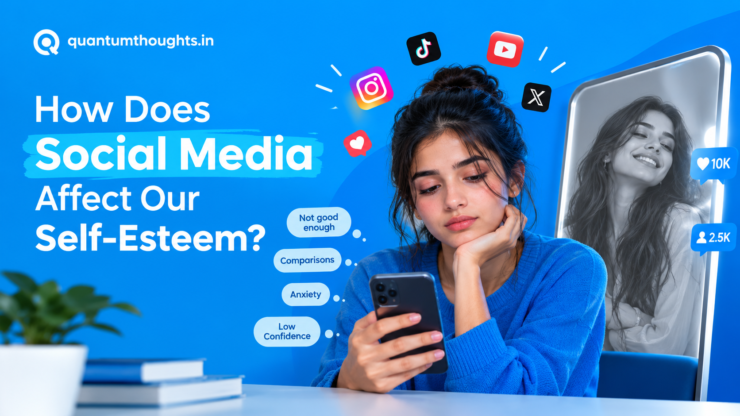
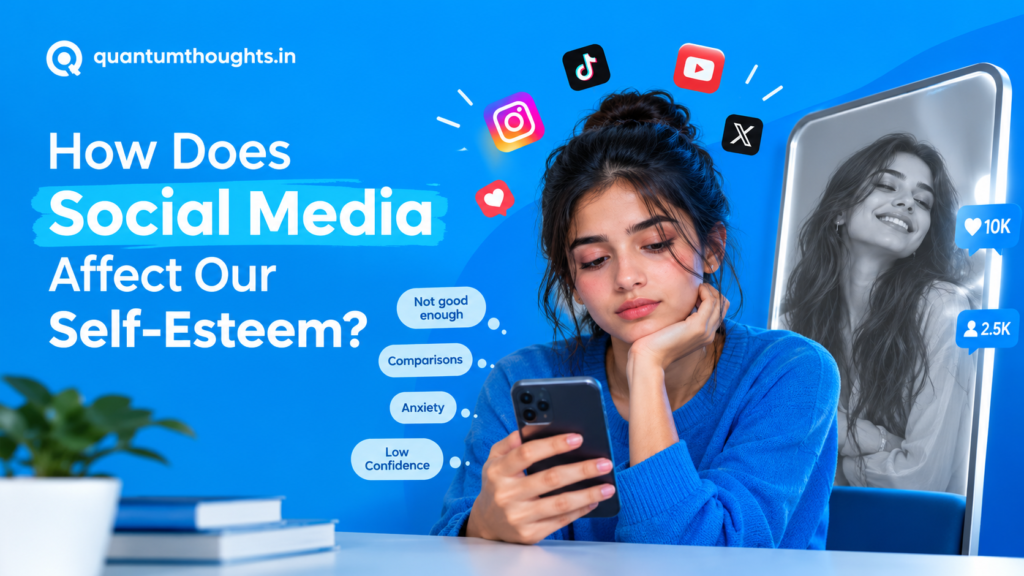
Social media can make us compare our real life with someone else’s carefully selected moments.
We open social media many times a day.
We see someone’s beautiful photo on Instagram.
Someone buys a new car.
Someone is on a trip abroad.
Someone’s career is going really well.
Someone is sharing beautiful photos of their relationship.
While seeing all this, a small thought sometimes crosses our minds:
“Everything is going well in everyone else’s life; why not in mine?”
This thought can gradually affect our self-esteem.
But there is an important point to understand here.
On social media, we don’t usually see people’s entire lives.
We only see the curated parts of their lives.
What is self-esteem?
Self-esteem is the inner feeling of how valuable, capable and worthy we are. Self-esteem is the inner feeling of how valuable, capable and worthy we are.
It’s not just about how you look. It’s not just about how you look.
It involves many thoughts about ourselves.
“Am I good enough?”
“Am I capable of doing something?”
“What is my worth?”
“How do others see me?”
When self-esteem is healthy, we do not base our worth solely on the approval of others.
However, social media can often challenge this.
The Comparison Trap
One of the biggest impacts of social media is social comparison.
We naturally compare ourselves to others.
However, social media constantly provides new material for this comparison.
We compare our bodies to someone else’s.
We compare our careers to theirs.
We look at someone’s lifestyle and wonder why our own life feels inadequate.
The problem is that such comparisons are often based on unequal information.
We know the full reality of our own lives.
Yet, we see only the highlights of another person’s life.
This comparison can set an unfair baseline.
The illusion that “everyone is doing better than me”
People generally share their best moments on social media:
Their successes.
Their travels.
Their celebrations.
Their best photos.
However, their failures, arguments, loneliness, insecurities, and difficult days often do not appear on the screen.
Consequently, our minds can often form a false picture:
“Everyone is happy.”
“Everyone is successful.”
“My life is the only one lagging behind.”
Yet, the reality is far more complex.
Everyone has aspects of their life that do not show up on social media.
Likes and Validation
On social media, likes, comments, shares, and followers might seem like mere numbers.
Yet, at times, they become a form of validation for our minds.
You post a photo.
It gets few likes.
Your mind tells you:
“People didn’t like my photo.”
A post receives high engagement.
Your mind feels happy:
“People are noticing me.”
Gradually, a connection can form between your self-worth and the response you get on social media.
Then, instead of asking yourself,
“How do I feel about myself?”
You start asking:
“How much do others like me?”
There is a vast difference between the two.
Filters and Perfect Appearance
Filters, editing, and carefully selected photos have become commonplace on social media.
Consequently, our expectations regarding appearance may also shift.
I notice that when we keep looking at polished pictures our real face may start to feel less attractive.
It is important to remember that a real face is not the same, as a filtered one. Comparing a face to a filtered one is not a fair comparison.
Social media images often do not fully reflect reality.
FOMO – Fear of Missing Out
Someone is at a party.
Someone is on a trip.
Someone is enjoying time with friends.
And we are at home.
That is when the thought crosses our mind:
“I am missing out on something.”
This is called FOMO – Fear of Missing Out.
Social media constantly shows us what other people are doing.
Consequently, our focus can shift away from our own lives and toward the lives of others.
And when we constantly think about what others are doing, our own progress can start to seem insignificant.
Algorithms and Attention
Social media platforms constantly show us new content to keep our attention engaged.
One video after another.
One photo after another.
One successful person after another.
This endless scrolling also provides endless opportunities for comparison.
There are times when we open social media without having any particular complaints about our lives.
But after scrolling for 30 minutes, we suddenly feel:
“I should change something in my life.”
This feeling isn’t always bad.
However, if it consistently turns into a sense of inadequacy or self-doubt, it can affect our self-esteem.
Is social media always bad?
No.
Social media itself is not bad.
I find social media very useful, for knowledge, inspiration, creativity, community and connection.
The problem often lies in how we use media.
If social media inspires us and motivates us to learn something then social media can be beneficial.
However if we start feeling inadequate after every media session then we need to reflect on the way we use social media.
How can you protect your self-esteem?
First observe your media habits.
Which social media accounts inspire you?
Which social media accounts trigger feelings of comparison, jealousy or inadequacy?
Consciously curate your feed.
Unfollowing or muting someone isn’t an act of negativity.
It can be a boundary for your mental well-being.
Secondly, do not mistake the information found on social media for the whole of reality.
A single photo of a person does not represent their entire life.
And someone else’s success is not your failure.
Most importantly:
Your worth is not defined by likes, followers, or views.








Add comment