

 Ravi Dangariya
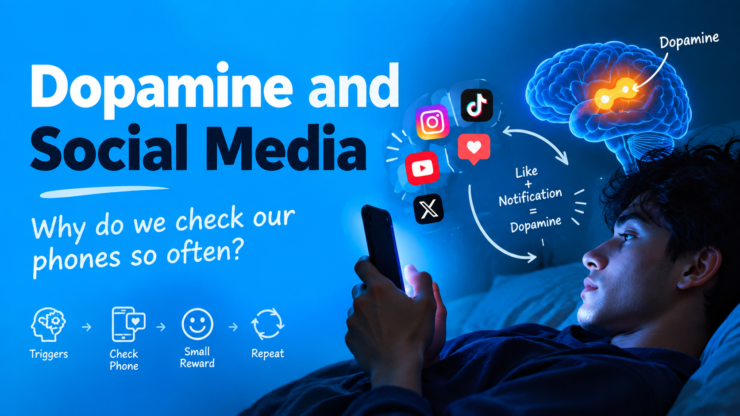
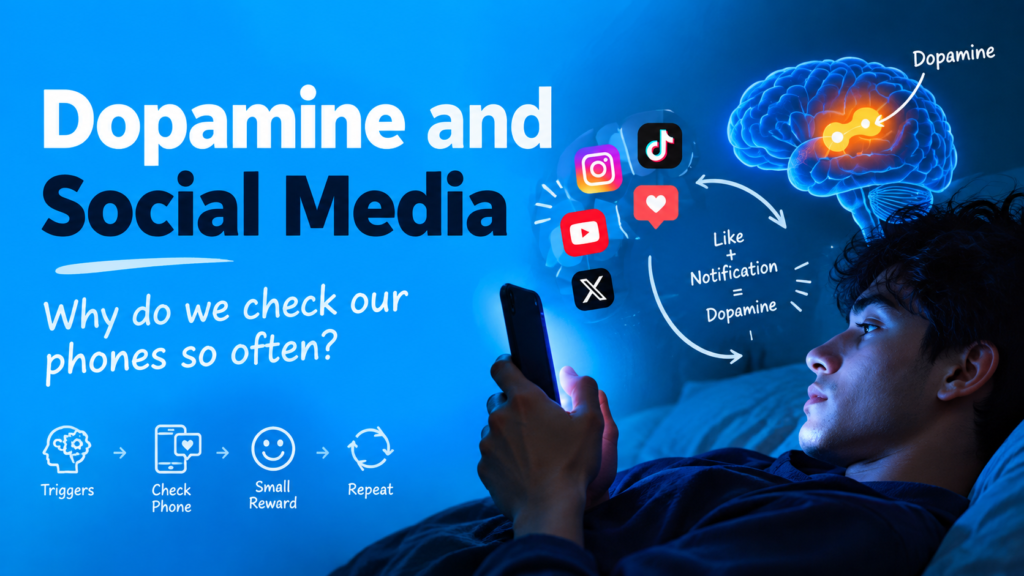
Sometimes we don’t check our phone because we need something; we check it because our brain expects something
Sometimes, we pick up our phone and then wonder:
“Why did I pick up the phone?”
There is no specific message.
There is no urgent task.
Yet, we end up opening Instagram, WhatsApp, or another app.
A short while later, we put the phone down, only to feel the urge to check it again soon after.
Why is this?
Dopamine and our brain’s reward system play a crucial role here.
What is dopamine?
Often, dopamine is called the “pleasure chemical,” but that’s a simplification.
Dopamine is a critical neurochemical for reward, motivation, learning, and anticipation.
Thus, dopamine is associated not only with the experience of pleasure but also with the anticipation of something interesting.
And social media utilizes this mechanism very effectively.
What will you find next on your phone?
Suppose you open Instagram.
Sometimes, you don’t find anything special.
But at other times, you come across an interesting message, a like, a comment, or a new post.
This experience is unpredictable.
Sometimes you get a reward, and sometimes you don’t.
This kind of unpredictability can hold our attention.
The brain learns to think:
“Let’s check again. Maybe there’s something new.”
And this “maybe” often reinforces the habit of checking the phone.
What do notifications do?
A phone notification is a small signal.
A message arrives.
A ‘like’ comes in.
A comment appears.
A new video is released.
These notifications can instantly grab our attention.
Sometimes, we check our phones even when there are no notifications.
This is because, over time, a habit of checking the phone develops alongside the notifications themselves.
We check our phones when we feel bored.
We check them while waiting for someone.
We check them when we need a short break from work.
Gradually, checking the phone can become an automatic behavior.
“Maybe there’s something new.”
The most interesting feature of social media is its constantly changing content.
The feed never truly ends.
One post after another.
One video after another.
One message, followed perhaps by another.
This constant stream of new information can compel the brain to check back repeatedly.
That is why we often check our phones not out of necessity, but out of curiosity and anticipation.
Is dopamine bad?
No.
Dopamine is essential for our brain.
The problem does not lie with dopamine itself.
Issues can come up when an activity takes much control over our attention and actions that we keep doing it even though we don’t want to.
If you can’t go for a while without looking at your phone it could help to watch your habit
What can you do to reduce how often you check your phone?
First, reduce your notifications.
You don’t need to respond to every notification immediately.
Second, instead of keeping your phone within arm’s reach at all times, keep it a bit further away.
Third whenever you feel like looking at your phone stop for a moment. Ask yourself
“Do I really need to look at something or am I just opening the phone because it is a habit?”
This one question can help change behavior into conscious behavior.









Add comment